+ Contact the Vocation Office to learn more about life as a monk at St. Vincent Archabbey 724.532.6655 +
Showing posts with label Lenten Reflections. Show all posts

April 19, 2014

LET THE TRUMPET OF SALVATION RESOUND


The Exultet hymn, sung at the Easter Vigil Liturgy, is the Easter Proclamation of the Catholic Church. It is a song that is full of symbolism and beauty, a song that calls the faithful to REJOICE in the Salvation that has been won for us by Christ our Redeemer. For on this Night of Nights we remember that darkness and evil has been conquered forever by the Morning Star, Jesus Christ who has risen victorious over the darkness of His Passion and Death on a Cross. Coming back from the domain of death, the Morning Star will burn forever, shedding its rays of peaceful light on humanity.


Exult, let them exult, the hosts of heaven,
exult, let Angel ministers of God exult,
let the trumpet of salvation
sound aloud our mighty King's triumph!

Be glad, let earth be glad, as glory floods her,
ablaze with light from her eternal King,
let all corners of the earth be glad,
knowing an end to gloom and darkness.

Rejoice, let Mother Church also rejoice,
arrayed with the lightning of his glory,
let this holy building shake with joy,
filled with the mighty voices of the peoples.

(Therefore, dearest friends,
standing in the awesome glory of this holy light,
invoke with me, I ask you,
the mercy of God almighty,
that he, who has been pleased to number me,
though unworthy, among the Levites,
may pour into me his light unshadowed,
that I may sing this candle's perfect praises).

(Deacon: The Lord be with you.
People: And with your spirit.)
Deacon: Lift up your hearts.
People: We lift them up to the Lord.
Deacon: Let us give thanks to the Lord our God.
People: It is right and just.

It is truly right and just,
with ardent love of mind and heart
and with devoted service of our voice,
to acclaim our God invisible, the almighty Father,
and Jesus Christ, our Lord, his Son, his Only Begotten.

Who for our sake paid Adam's debt to the eternal Father,
and, pouring out his own dear Blood,
wiped clean the record of our ancient sinfulness.

These, then, are the feasts of Passover,
in which is slain the Lamb, the one true Lamb,
whose Blood anoints the doorposts of believers.

This is the night,
when once you led our forebears, Israel's children,
from slavery in Egypt
and made them pass dry-shod through the Red Sea.

This is the night
that with a pillar of fire
banished the darkness of sin.

This is the night
that even now throughout the world,
sets Christian believers apart from worldly vices
and from the gloom of sin,
leading them to grace
and joining them to his holy ones.

This is the night
when Christ broke the prison-bars of death
and rose victorious from the underworld.

Our birth would have been no gain,
had we not been redeemed.
O wonder of your humble care for us!
O love, O charity beyond all telling,
to ransom a slave you gave away your Son!

O truly necessary sin of Adam,
destroyed completely by the Death of Christ!

O happy fault
that earned for us so great, so glorious a Redeemer!

O truly blessed night,
worthy alone to know the time and hour
when Christ rose from the underworld!

This is the night
of which it is written:
The night shall be as bright as day,
dazzling is the night for me, and full of gladness.

The sanctifying power of this night
dispels wickedness, washes faults away,
restores innocence to the fallen, and joy to mourners,
drives out hatred, fosters concord, and brings down the mighty.

On this, your night of grace, O holy Father,
accept this candle, a solemn offering,
the work of bees and of your servants' hands,
an evening sacrifice of praise,
this gift from your most holy Church.

But now we know the praises of this pillar,
a flame divided but undimmed,
which glowing fire ignites for God's honour,
a fire into many flames divided,
yet never dimmed by sharing of its light,
for it is fed by melting wax,
drawn out by mother bees
to build a torch so precious.

O truly blessed night,
when things of heaven are wed to those of earth,
and divine to the human.

Therefore, O Lord,
we pray you that this candle,
hallowed to the honour of your name,
may persevere undimmed,
to overcome the darkness of this night.
Receive it as a pleasing fragrance,
and let it mingle with the lights of heaven.
May this flame be found still burning
by the Morning Star:
the one Morning Star who never sets,
Christ your Son,
who, coming back from death's domain,
has shed his peaceful light on humanity,
and lives and reigns for ever and ever.
Amen.

April 10, 2014

A Reflection on Chapter 15 of the Rule of St. Benedict

Chapter 15 of the Rule of St. Benedict:
The Times to say "Alleluia" 


From holy Easter until Pentecost without interruption 
let "Alleluia" be said 
both in the Psalms and in the responsories. 
From Pentecost to the beginning of Lent 
let it be said every night 
with the last six Psalms of the Night Office only. 
On every Sunday, however, outside of Lent, 
the canticles, the Morning Office, Prime, Terce, Sext and None 
shall be said with "Alleluia," 
but Vespers with antiphons.

The responsories are never to be said with "Alleluia" 
except from Easter to Pentecost.


Reflection:

          In Chapter 15, St. Benedict regulates the times for saying Alleluia, which means “Praise the Lord!” So why is Benedict so concerned about limiting the use of such a magnificent word? It is because Benedict knew the tremendous meaning Alleluia signifies when it is used in a proper time and place. For instance, Benedict was probably very aware that the only time Alleluia is used in the New Testament is chapter nineteen of the Book of Revelation (verses: 1, 3, 4, 6), the Wedding Feast of the Lamb, the triumphal banquet where all the souls redeemed by Christ unceasingly Praise God for His Salvation. For Benedict, life at the monastery was supposed to be a foretaste of this life in Heaven, this Wedding Feast of the Lamb. Therefore, in anticipation of this Heavenly Life, Benedict might have said, “If we will be unceasingly acclaiming Alleluia when we are in Heaven, how could we not also acclaim it while we are still exiles here on earth?” Clearly Benedict knew and loved the beauty of this word! However, he also recognized that we lowly and sinful exiles have yet to fully attain this Blessed Life. Therefore, the most appropriate times for saying Alleluia are related to the times we most vividly remember the Resurrection: the entire season of Easter, Vigils, that is, early in the morning, the time of day that Christ rose from the dead, and Sunday, the day of Resurrection!                              


March 27, 2014

Stations of the Cross


https://www.youtube.com/watch?v=hl8OkDg455Q

Fr. Max leads St. Vincent College Students on an outdoor pilgrimage of the Stations of the Cross

March 18, 2014

Commentary on Chapter 49 of the Rule of St. Benedict: Observance of Lent


What wisdom we find in Saint Benedict when he says that few have the strength to live a continuous Lent, even if it is an ideal. This type of thinking and writing is important because it reflects clearly how Saint Benedict is able to accept lots of different types of monks and not get totally discouraged when they are not all perfect. Just as few have the strength to live a continuous Lent, neither should we expect in any way that we will find perfect monks in any community.

This mode of thinking never takes away the responsibility of the monk to keep striving to lead a better monastic life. What it does is encourage each monk to strive to accept his brothers as they are and to work personally for a better monastic life and to work to strengthen the monastic community and its observances.

So, for Saint Benedict, even though he recognizes that the monk cannot live a continuous Lent, he still recommends various ascetic practices during Lent. It is clear that the monk should add "something" to his normal style of living monastic life during Lent. Saint Benedict is not shy about suggesting that the monk can deny himself some food, some drink, some sleep, some needless talking and idle jesting... We can understand about giving up a little food and drink, but it sounds like Saint Benedict accepts a certain measure of needless talking and idle jesting in those times which are not Lent! Probably it is simply the realism of Saint Benedict shining through in his Rule once again.

But whatever the monk does, he must receive blessing from the abbot. Monastic life is not a private life! We need to open our hearts and our souls to the abbot, always with prudence, of course, but nevertheless a true openness. This is one of the most difficult aspects of monastic life today, when we are all used to lots of privacy and also used to making our own decisions.

For Saint Benedict, being a monk means never taking a decision by oneself--ever! Always a true monk must include his monastic superior in any decisions that he takes about his life or way of living the monastic life.

May we all grow in the aspects of monastic life mentioned in this Chapter. May we strive to be strong and to offer something to the Lord. May we learn to ask our abbot's blessing on our lives and on our decisions.

 Philip Lawrence, OSB, Abbot of Christ in the Desert


For more commentaries by Abbot Lawrence, visit: http://christdesert.org/Detailed/919.html 

March 10, 2014

Lent

From Chapter 49 of the Rule of St. Benedict:
The Observance of Lent


The life of a monk ought to be a continuous Lent. Since few, however, have the strength for this, we urge the entire community during these days of Lent to keep its manner of life most pure and to wash away in this holy season the negligences of other times. This we can do in a fitting manner by refusing to indulge evil habits and by devoting ourselves to prayer with tears, to reading, to compunction of heart and self-denial. During these days, therefore, we will add to the usual measure of our service something by way of private prayer and abstinence from food or drink, so that each of us will have something above the assigned measure to offer God of his own will with the joy of the Holy Spirit (1 Thess 1:6). In other words, let each one deny himself some food, drink, sleep, needless talking and idle jesting, and look forward to holy Easter with joy and spiritual longing. Everyone should, however, make known to the abbot what he intends to do, since it ought to be done with his prayer and approval. Whatever is undertaken without the permission of the spiritual father will be reckoned as presumption and vainglory, not deserving a reward. Therefore, everything must be done with the abbot's approval.

April 3, 2009

Palm Sunday 2009

 
Hosanna to the Son of David, the King of Israel.  Blessed is he who comes in the name of the Lord.  Hosanna in the highest. (Matthew 21:9)

April 1, 2009

Palm Sunday 2009

Here is a cool little guide on how to make Palm Crosses from www.fisheaters.com.  I would encourage all our readers to truly enter into the Holy Week by reflecting on the Gospel readings for Palm Sunday and to take a palm branch as a reminder of our Lord's victory over the world (Psalm 91:13).


How to make palm Crosses to tuck behind picture frames and hang on your wall
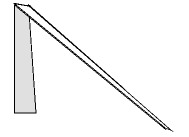
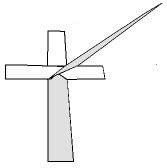
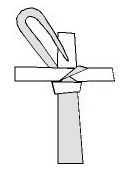
Take a palm that is about 2 feet long and 1/2" wide (if it tapers at the top, this is good!). Hold the palm upright, so the tapered end points toward the ceiling.
Then bend the top end down and toward you so that the bend is about 5 or 6 inches from the bottom of the palm.
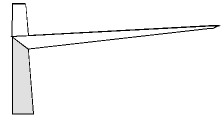
About a third of the way from the bend you just made, twist the section you've pulled down to the right, forming a right angle.
About an inch and a half away from the "stem" of the cross, bend this arm of the palm back behind the palm so that it is now facing to your left. Make the bend at a good length to form the right arm of the Cross.
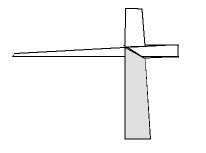
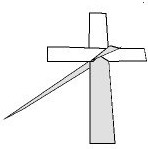
Folding that same section at a point that equals the length on the right side, bend it on the left side and bring the end forward over what is now the front of the cross.
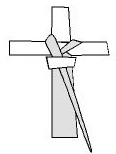
From the very center of the Cross, fold that arm up and to the upper right (in a "northeast" direction) so that it can wrap around where the upright post of the Cross and the right arm intersect.
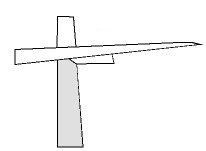
Fold this down and to the left behind the Cross...
...and then fold it toward the right so that it is parallel and under the transverse arms of the Cross.
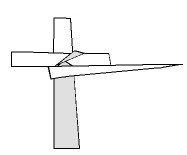
Bring it up behind the Cross again, this time folding it up toward the "northwest" direction.
Tuck the tapered end into the transverse section you made in step 7...
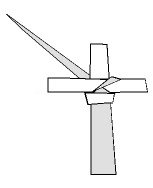
...and pull through.
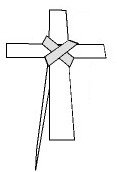
Turn the Cross over; this side will be the front. Trim the tapered end if necessary, remembering that the palm is a sacramental and any part you trim away should be kept and respected as a sacramental! Use that piece for burning during storms.

March 30, 2009

Stations of the Cross

Click here for a link to St. Alphonsus Liguori's Stations of the Cross (beautiful words to reflect upon as we enter Holy Week)

March 4, 2009

Pope's Lenten Message 2009

MESSAGE OF HIS HOLINESS
BENEDICT XVI
FOR LENT 2009

"He fasted for forty days and forty nights,
and afterwards he was hungry" (Mt 4,1-2)


Dear Brothers and Sisters!

At the beginning of Lent, which constitutes an itinerary of more intense spiritual training, the Liturgy sets before us again three penitential practices that are very dear to the biblical and Christian tradition – prayer, almsgiving, fasting – to prepare us to better celebrate Easter and thus experience God’s power that, as we shall hear in the Paschal Vigil, “dispels all evil, washes guilt away, restores lost innocence, brings mourners joy, casts out hatred, brings us peace and humbles earthly pride” (Paschal Præconium). For this year’s Lenten Message, I wish to focus my reflections especially on the value and meaning of fasting. Indeed, Lent recalls the forty days of our Lord’s fasting in the desert, which He undertook before entering into His public ministry. We read in the Gospel: “Jesus was led up by the Spirit into the wilderness to be tempted by the devil. He fasted for forty days and forty nights, and afterwards he was hungry” (Mt 4,1-2). Like Moses, who fasted before receiving the tablets of the Law (cf. Ex 34,28) and Elijah’s fast before meeting the Lord on Mount Horeb (cf. 1 Kings 19,8), Jesus, too, through prayer and fasting, prepared Himself for the mission that lay before Him, marked at the start by a serious battle with the tempter.

We might wonder what value and meaning there is for us Christians in depriving ourselves of something that in itself is good and useful for our bodily sustenance. The Sacred Scriptures and the entire Christian tradition teach that fasting is a great help to avoid sin and all that leads to it. For this reason, the history of salvation is replete with occasions that invite fasting. In the very first pages of Sacred Scripture, the Lord commands man to abstain from partaking of the prohibited fruit: “You may freely eat of every tree of the garden; but of the tree of the knowledge of good and evil you shall not eat, for in the day that you eat of it you shall die” (Gn 2, 16-17). Commenting on the divine injunction, Saint Basil observes that “fasting was ordained in Paradise,” and “the first commandment in this sense was delivered to Adam.” He thus concludes: “ ‘You shall not eat’ is a law of fasting and abstinence” (cf. Sermo de jejunio: PG 31, 163, 98). Since all of us are weighed down by sin and its consequences, fasting is proposed to us as an instrument to restore friendship with God. Such was the case with Ezra, who, in preparation for the journey from exile back to the Promised Land, calls upon the assembled people to fast so that “we might humble ourselves before our God” (8,21). The Almighty heard their prayer and assured them of His favor and protection. In the same way, the people of Nineveh, responding to Jonah’s call to repentance, proclaimed a fast, as a sign of their sincerity, saying: “Who knows, God may yet repent and turn from his fierce anger, so that we perish not?” (3,9). In this instance, too, God saw their works and spared them.

In the New Testament, Jesus brings to light the profound motive for fasting, condemning the attitude of the Pharisees, who scrupulously observed the prescriptions of the law, but whose hearts were far from God. True fasting, as the divine Master repeats elsewhere, is rather to do the will of the Heavenly Father, who “sees in secret, and will reward you” (Mt 6,18). He Himself sets the example, answering Satan, at the end of the forty days spent in the desert that “man shall not live by bread alone, but by every word that proceeds from the mouth of God” (Mt 4,4). The true fast is thus directed to eating the “true food,” which is to do the Father’s will (cf. Jn 4,34). If, therefore, Adam disobeyed the Lord’s command “of the tree of the knowledge of good and evil you shall not eat,” the believer, through fasting, intends to submit himself humbly to God, trusting in His goodness and mercy.

The practice of fasting is very present in the first Christian community (cf. Acts 13,3; 14,22; 27,21; 2 Cor 6,5). The Church Fathers, too, speak of the force of fasting to bridle sin, especially the lusts of the “old Adam,” and open in the heart of the believer a path to God. Moreover, fasting is a practice that is encountered frequently and recommended by the saints of every age. Saint Peter Chrysologus writes: “Fasting is the soul of prayer, mercy is the lifeblood of fasting. So if you pray, fast; if you fast, show mercy; if you want your petition to be heard, hear the petition of others. If you do not close your ear to others, you open God’s ear to yourself” (Sermo 43: PL 52, 320. 322).

In our own day, fasting seems to have lost something of its spiritual meaning, and has taken on, in a culture characterized by the search for material well-being, a therapeutic value for the care of one’s body. Fasting certainly bring benefits to physical well-being, but for believers, it is, in the first place, a “therapy” to heal all that prevents them from conformity to the will of God. In the Apostolic Constitution Pænitemini of 1966, the Servant of God Paul VI saw the need to present fasting within the call of every Christian to “no longer live for himself, but for Him who loves him and gave himself for him … he will also have to live for his brethren“ (cf. Ch. I). Lent could be a propitious time to present again the norms contained in the Apostolic Constitution, so that the authentic and perennial significance of this long held practice may be rediscovered, and thus assist us to mortify our egoism and open our heart to love of God and neighbor, the first and greatest Commandment of the new Law and compendium of the entire Gospel (cf. Mt 22, 34-40).

The faithful practice of fasting contributes, moreover, to conferring unity to the whole person, body and soul, helping to avoid sin and grow in intimacy with the Lord. Saint Augustine, who knew all too well his own negative impulses, defining them as “twisted and tangled knottiness” (Confessions, II, 10.18), writes: “I will certainly impose privation, but it is so that he will forgive me, to be pleasing in his eyes, that I may enjoy his delightfulness” (Sermo 400, 3, 3: PL 40, 708). Denying material food, which nourishes our body, nurtures an interior disposition to listen to Christ and be fed by His saving word. Through fasting and praying, we allow Him to come and satisfy the deepest hunger that we experience in the depths of our being: the hunger and thirst for God.

At the same time, fasting is an aid to open our eyes to the situation in which so many of our brothers and sisters live. In his First Letter, Saint John admonishes: “If anyone has the world’s goods, and sees his brother in need, yet shuts up his bowels of compassion from him – how does the love of God abide in him?” (3,17). Voluntary fasting enables us to grow in the spirit of the Good Samaritan, who bends low and goes to the help of his suffering brother (cf. Encyclical Deus caritas est, 15). By freely embracing an act of self-denial for the sake of another, we make a statement that our brother or sister in need is not a stranger. It is precisely to keep alive this welcoming and attentive attitude towards our brothers and sisters that I encourage the parishes and every other community to intensify in Lent the custom of private and communal fasts, joined to the reading of the Word of God, prayer and almsgiving. From the beginning, this has been the hallmark of the Christian community, in which special collections were taken up (cf. 2 Cor 8-9; Rm 15, 25-27), the faithful being invited to give to the poor what had been set aside from their fast (Didascalia Ap., V, 20,18). This practice needs to be rediscovered and encouraged again in our day, especially during the liturgical season of Lent.

From what I have said thus far, it seems abundantly clear that fasting represents an important ascetical practice, a spiritual arm to do battle against every possible disordered attachment to ourselves. Freely chosen detachment from the pleasure of food and other material goods helps the disciple of Christ to control the appetites of nature, weakened by original sin, whose negative effects impact the entire human person. Quite opportunely, an ancient hymn of the Lenten liturgy exhorts: “Utamur ergo parcius, / verbis cibis et potibus, / somno, iocis et arctius / perstemus in custodia – Let us use sparingly words, food and drink, sleep and amusements. May we be more alert in the custody of our senses.”

Dear brothers and sisters, it is good to see how the ultimate goal of fasting is to help each one of us, as the Servant of God Pope John Paul II wrote, to make the complete gift of self to God (cf. Encyclical Veritatis splendor, 21). May every family and Christian community use well this time of Lent, therefore, in order to cast aside all that distracts the spirit and grow in whatever nourishes the soul, moving it to love of God and neighbor. I am thinking especially of a greater commitment to prayer, lectio divina, recourse to the Sacrament of Reconciliation and active participation in the Eucharist, especially the Holy Sunday Mass. With this interior disposition, let us enter the penitential spirit of Lent. May the Blessed Virgin Mary, Causa nostrae laetitiae, accompany and support us in the effort to free our heart from slavery to sin, making it evermore a “living tabernacle of God.” With these wishes, while assuring every believer and ecclesial community of my prayer for a fruitful Lenten journey, I cordially impart to all of you my Apostolic Blessing.

From the Vatican, 11 December 2008.

February 25, 2009

ASH WEDNESDAY

From: EWTN.com

The liturgical use of ashes originated in the Old Testament times. Ashes symbolized mourning, mortality and penance. In the Book of Esther, Mordecai put on sackcloth and ashes when he heard of the decree of King Ahasuerus to kill all of the Jewish people in the Persian Empire (Esther 4:1). Job repented in sackcloth and ashes (Job 42:6). Prophesying the Babylonian captivity of Jerusalem, Daniel wrote, "I turned to the Lord God, pleading in earnest prayer, with fasting, sackcloth, and ashes" (Daniel 9:3).
Jesus made reference to ashes, "If the miracles worked in you had taken place in Tyre and Sidon, they would have reformed in sackcloth and ashes long ago" (Matthew 11:21).

In the Middle Ages, the priest would bless the dying person with holy water, saying, "Remember that thou art dust and to dust thou shalt return."

The Church adapted the use of ashes to mark the beginning of the penitential season of Lent, when we remember our mortality and mourn for our sins. In our present liturgy for Ash Wednesday, we use ashes made from the burned palm branches distributed on the Palm Sunday of the previous year. The priest blesses the ashes and imposes them on the foreheads of the faithful, making the sign of the cross and saying, "Remember, man you are dust and to dust you shall return," or "Turn away from sin and be faithful to the Gospel." As we begin this holy season of Lent in preparation for Easter, we must remember the significance of the ashes we have received: We mourn and do penance for our sins. We again convert our hearts to the Lord, who suffered, died, and rose for our salvation. We renew the promises made at our baptism, when we died to an old life and rose to a new life with Christ. Finally, mindful that the kingdom of this world passes away, we strive to live the kingdom of God now and look forward to its fulfillment in heaven.

February 24, 2009

Fasting - more than just fish!!!

As many of you know, a number of our monks function as bi-ritual priests (meaning they are able to celebrate the Holy Eucharist in both the Latin and some of the Eastern Rite Catholic Churches).  The following is a beautiful reflection on fasting from Archbishop Basil of the Ruthenian Catholic Archeparchy of Pittsburgh.  Within many of the Eastern Rites of our Holy Catholic Church, our fellow Catholics practice what is called "The Great Fast," maybe this year we all can learn a little from our Eastern brothers and sisters by reflecting and practicing this great tradition. 
From: Pittsburgh Archeparchy
 
Dear Bishops, Clergy, Monastics and Laity,

“While fasting bodily, O faithful, let us also fast in spirit; let us loosen every bond of injustice, let us tear apart the strong chains of violence; let us rip up all unjust assertions; let us give bread to the hungry and welcome the poor and homeless to our houses, that we may receive from Christ our God his great mercy.”

This beautiful prayer is from the vesper service during the first week of the Great Fast. It reminds us of all the myriad tasks that will help you and me journey across the Ocean of the Great Fast and reach the joyful shore of the Resurrection of the Lord. We are moved from the purely physical to the spiritual realm. The prayer contains implicitly the triptych of the Lenten Season: prayer, fasting and almsgiving. Without these we are unable to loosen bonds, conquer violence, keep just our assertions, feed the hungry and invite the poor to our homes.

The Fathers of the Church: John Chrysostom, Clement of Alexandria and Basil the Great, tell us that prayer is: standing with our mind centered in our heart, a conversation with God raised to heaven, the raising of the mind to God and the asking for good things, nourishment for the soul with divine thoughts, centering the mind to a cheerful and calm state. During this Lenten season we need to strengthen our efforts during communal prayer in our parishes and families along with setting aside a specific time each day for personal prayer. We need to remember others in prayer, whether they are our friends or enemies. We need to read the scriptures and choose a verse to reflect on throughout the day. Without prayer, the Great Fast has no meaning. How will you pray during this special season?

Tertullian encourages us to feed prayer with fasting. Fasting is often understood as the refraining from food and indeed it is. There are the prescribed fasting regulations of the church for the faithful during the Great Fast. By the grace of God, some are able to fast beyond the required prescriptions of the Church and adhere to the more complete traditional fasting. However, we all must remember that fasting is not an absolute virtue but the foundation for other virtues. The holy men and women of the past warn us that unless fasting is followed by a temperate partaking of food, one will not be able to arrive at the goal of perfection.

We know that when we speak of fasting it includes more than just food. The true fast is one, which drives us away from sin, and our sinful passions. We need to fast from violence in words, thoughts and actions. We need to fast from falsehoods and all unjust assertions. When going to church during this special season we need to fast from saying negative comments – true or false – to anyone and about anyone. Fasting allows us to say the right thing at all times and refrain from saying the wrong thing at the extremely tempting moment. Sometimes we need to fast even from the past, especially when it takes us away from the present where God acts in our lives. Without fasting, the Great Fast has no meaning. How will you fast during this special season?

Saint Clement tell us that fasting is better than prayer, but almsgiving is better then both. Another way of saying almsgiving is to leave love as your footprint. The Great Fast is the time to be generous from our bounty and our need. It is the time to remember the widow’s mite in the gospel. It is the time to give to the poor and this is becoming more difficult during the present financial crisis of our country and in fact the world. Almsgiving is not only concerned with material things but also with emotional, psychological and spiritual realities of our lives. Even the person without a single penny can give the alms of a prayer, a compliment, a word of encouragement, a greeting, forgiveness, gratitude or just a smile. There is no reason for a Christian not to give alms whether material or spiritual. On the other hand, there is no reason for a Christian not to accept alms from another. Without almsgiving the Great Fast has no meaning. How will you give alms during this special season?

We, as Christians, are always called to be people of prayer, fasting and almsgiving but most especially during the Great Fast. However, the emphasis is on us and our obligations; we are not to bother ourselves about the actions of others. That is why, we pray in the prayer of St. Ephrem: O Lord and King, grant me the grace to be aware of my sins and not to judge my brothers and sisters; for you are blessed now and ever and forever. Amen.

Asking the Lord to send his blessings on each of you and your families during the Great Fast, I remain:


In the name of the Lord!

+Basil
Metropolitan Archbishop of Pittsburgh

Lent 2009

Tomorrow is Ash Wednesday and thus the beginning of Lent.  As Catholics and as men and women discerning the monastic way of life it is important to reflect upon what our Holy Father St. Benedict has to say in the Holy Rule concerning Lent.  Here is the 1949 translation of Chapter  49 the Holy Rule from our daughter house's website: www.kansasmonks.org
 "Remember Man that you are made of dust and to dust you shall return"

+On the Keeping of Lent+
The life of a monk ought always to be a Lenten observance. However, since such virtue is that of few, we advise that during these days of Lent he guard his life with all purity and at the same time wash away during these holy days all the shortcomings of other times. This will then be worthily done, if we restrain ourselves from all vices. Let us devote ourselves to tearful prayers, to reading and compunction of heart, and to abstinence.
 During these days, therefore, let us add something to the usual amount of our service, special prayers, abstinence from food and drink, that each one offer to God "with the joy of the Holy Ghost" (1 Thes 1:6), of his own accord, something above his prescribed measure; namely, let him withdraw from his body somewhat of food, drink, sleep, speech, merriment, and with the gladness of spiritual desire await holy Easter.
Portrait of a Monk in Prayer - French Painter about 1500
Let each one, however, make known to his Abbot what he offereth and let it be done with his approval and blessing; because what is done without permission of the spiritual father will be imputed to presumption and vain glory, and not to merit. Therefore, let all be done with the approval of the Abbot.

March 20, 2008

 
But Jesus was silent. (Matthew, Chapter 26)

March 13, 2008

No Greater Love

One of the great blessings of Lent in the monastic life is that it calls the monk to take a good hard look at himself and ask, "Am I truly doing all that I can for Jesus Christ and His holy Church?, am I striving to lay down my life for others?, am I trying to be the best monk I can be?" As Holy Week quickly approaches I ask you to take time in your own life to ponder and pray over the questions that really matter. Ask Jesus to show you the ways He is calling you to lay down your life for others. Holy Week teaches us to focus on the Holy cross and be willing to surrender our wills to the will of the Father. Monks prostrating themselves as they give themselves totally to Jesus Christ at Solemn Profession.
Br. (soon to be Father) Michael, Fr. Fred, Fr. Shawn Matthew, and Fr. Boniface.

March 7, 2008

Something to ponder

FROM The New Interpreter's Bible

"A Jewish story tells of the good fortune of a hardworking farmer. The Lord appeared to this farmer and granted him three wishes, but with the condition that whatever the Lord did for the farmer would be given double to his neighbor. The farmer, scarcely believing his good fortune, wished for a hundred cattle. Immediately he received a hundred cattle, and his neighbor had two hundred. So he wished for a hundred acres of land, and again he was filled with joy until he saw that his neighbor had two hundred acres of land. Rather than celebrating God s goodness, the farmer could not escape feeling envious and slighted because his neighbor had received more than he. Finally, he stated his third wish: that God would strike him blind in one eye.

And God wept."

For more reflections see our Archabbey websites daily homilies by clicking here

February 29, 2008

Lenten Reflection

 
For monks it is important to keep the Passion of our Lord ever before our eyes and to meditate on the suffering He endured to redeem us from our sins. Our Novice Brothers wanted to provide all you men discerning a vocation an opportunity to pray with them during this most Holy time of Lent.

Click here to pray the Stations of the Cross with the Brothers, Great job guys!

February 25, 2008

Great article on Br. Elijah's "The Way of the Cross"

Check out this great article about Br. Elijah's "Way of the Cross" performance. More information on the show in the blog under the labels section. (Click on article to Read)


February 19, 2008

"The Way of the Cross"


The St. Vincent Archabbey vocation office will sponsor "The Way of the Cross", a dramatic and musical presentation of the Stations of the Cross, March 6—9, 2008. Written by Brother Elijah Cirigliano, O.S.B., the show has been performed 19 times in New York and Connecticut, before making its Pennsylvania debut in February 2007.

Performances are set for 7:30 p.m. on Thursday and Friday, March 6 and 7, and for 2 p.m. on Saturday and Sunday, March 8 and 9, and will take place in the Saint Vincent Theater in Carey Hall. Cost is $10 per adult and $5 per student, with all proceeds from the show going to support vocation programs at Saint Vincent. Discounts are available for groups of more than 100 people.

Prior to joining the Benedictine community at Saint Vincent, Br. Elijah worked as a Musical Director at St. Mary Parish in Katonah, New York. The pastor there encouraged Br. Elijah to write a musical piece that became The Way of the Cross. The 2006 performances will include Brother Elijah singing and playing the piano, and performances from professional and student actors and musicians.

Please call Fr. Fred at (724) 532-6655 to reserve a place for the performance.

February 18, 2008

Quotes from our Founder

“The life of man is a struggle on earth. But without a cross, without a struggle, we get nowhere. The victory will be ours if we continue our efforts courageously, even when at times they appear futile.” - Archabbot Boniface Wimmer, O.S.B.
 

(Founder of St. Vincent Archabbey)

Pax et Gaudium

O.S.B. Vocation Awareness

O.S.B. Vocation Awareness